Safer Internet Day
Celebrating Safer Internet Day: Learning About Our Rights and Responsibilities Online
This week, our school joined millions of children around the world in marking Safer Internet Day. The theme focused on understanding our rights as children, as well as the responsibilities we all share when using the internet. Pupils took part in thoughtful, engaging activities that helped them explore how to stay safe, act kindly and protect their wellbeing online.
A key part of the learning linked directly to the UN Convention on the Rights of the Child (UNCRC), particularly the rights to be safe, be heard, access information, and be protected from harm. Children reflected on how these rights apply to the digital world just as much as the physical one — and how we all play a role in respecting the rights of others when we are online.
Classes explored what it means to be kind online. Through stories, discussions and digital role-play, pupils identified examples of positive online behaviour such as using friendly language, including others in group chats, asking permission before sharing photos and celebrating each other’s achievements. They also recognised unkind behaviours and talked about how online actions can affect someone’s feelings just as strongly as face-to-face words.
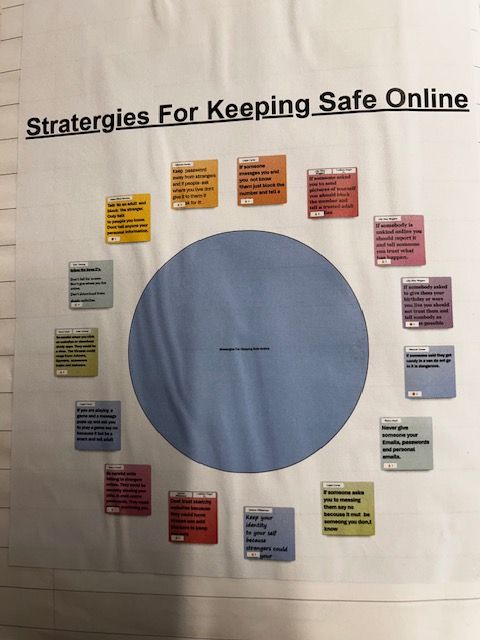
Another important focus was developing strategies for keeping themselves safe online. Pupils learned practical steps they can use every day, including:
-
Thinking before posting and considering who might see the information.
-
Using privacy settings to control who can contact them.
-
Knowing when to log off if something feels uncomfortable or overwhelming.
-
Talking to a trusted adult whenever they feel unsure or worried.
-
Being critical thinkers, questioning messages, links and information that may not be reliable.
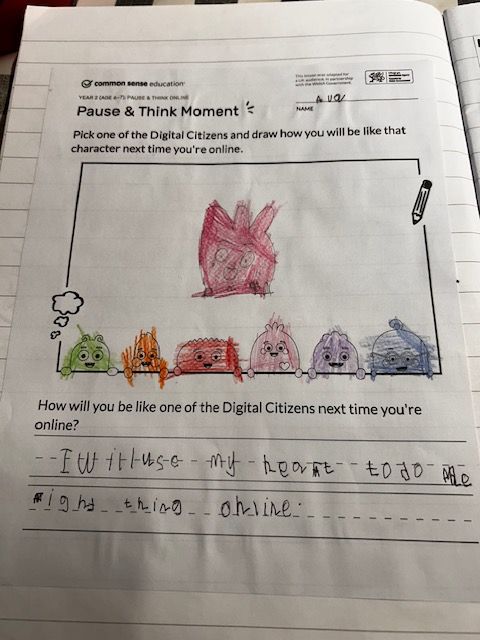
Throughout the week, children created posters and pledges that linked their online behaviour to their rights and responsibilities. Many classes also discussed how standing up for others — by reporting unkind behaviour or supporting someone who feels left out — helps protect everyone’s rights and creates a safer online community.